Building RIPE SEE: A Conversation with Jan Žorž About Community, Trust, and the Work Behind a Regional Event
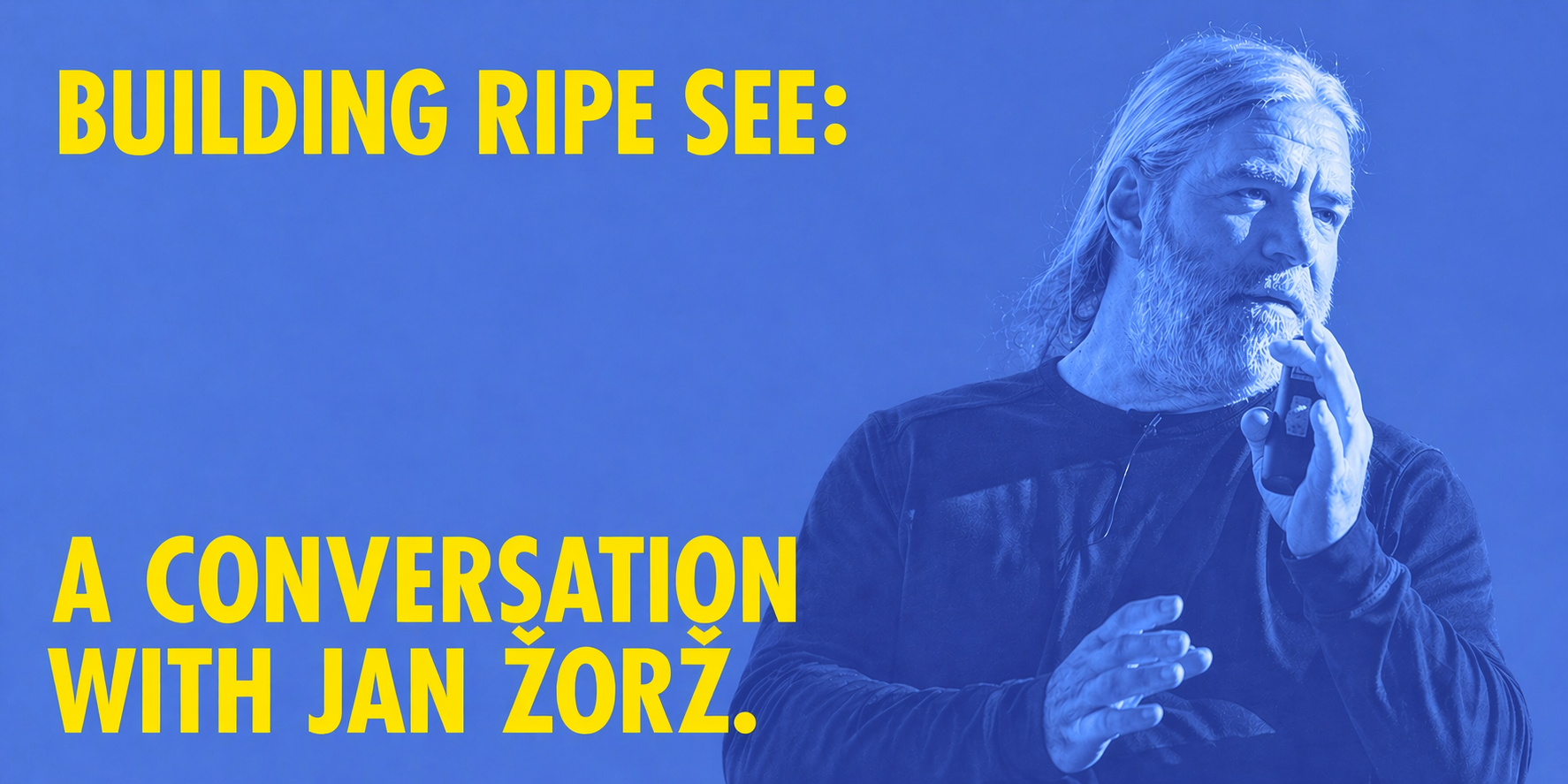
Q: To start with some background, how long have you been involved with RIPE, and with SEE community specifically?
My first contact with RIPE goes back to around 1996, when I was working for Telekom Slovenia. At that time we were establishing the national incumbent ISP, Slovenia Online, and I had to request the first IP resources for the operator. That was my introduction.
It was a very different time. RIPE NCC was much smaller then, and the whole process felt quite painful. There were not many people, and everything happened over email, talking to a bot. Still, that was the beginning.
A couple of years later, around 1997 or 1998, I got into IPv6. I installed the first patch on my Solaris box, connected to the 6bone, started pinging things around, and I more or less stayed on that track from then on. So I have quite a long history both with RIPE and with IPv6.
As for SEE RIPE Regional meeting, the first gathering was in 2011 in Dubrovnik, Croatia. That was the starting point.
Q: How did SEE begin, and what was the original idea behind it?
The idea came from Vesna Manojlović, RIPE NCC. After some discussion we came to the conclusion that we wanted to bring the region together. More specifically, we wanted to create something that would bring the RIPE community spirit into Southeastern Europe, especially for people who were not attending the larger RIPE meetings.
That was really the point. Not to create a smaller copy of RIPE for its own sake, but to make space for people in the region who were not otherwise part of that wider conversation.
For the first meeting, Vesna was the chair. After that, she felt that because she worked for the RIPE NCC, it was better not to continue in that role. She asked me to step in, mostly because I had the most experience with these kinds of things at the time.
Since then, I have kept doing it. I always step down after every meeting, but somehow I am still here.
Q: What has kept you involved for so long?
I believe in this kind of meeting.
For me, SEE has always been a very good complement to the local NOGs in the region. I created the Slovenian NOG and I’m still running it. I also helped with the Croatian one. I am still trying to help Bosnia and Herzegovina get theirs properly off the ground. I have also helped in Montenegro and North Macedonia, and now I am part of the organisational team around the Serbian community as well.
Local NOGs matter because they are vital for the health of the Internet in each country. But SEE meeting adds something else. It brings the whole region together. People can see each other, talk to each other, compare experiences, and get a sense that they are part of something bigger than their own national or company boundaries.
That matters a lot to me. I have been in this industry for 30 years. I have seen a lot. I have helped operators around the world build networks and implement IPv6. But I still really enjoy helping smaller communities come together and grow.
Q: When you say “come together,” what do you mean in practice?
I mean something very simple, actually: People talking to each other openly.
In our region, for a long time, many people were used to sitting in their own small walled gardens. Everyone stayed inside their own space, looked over the fence at the neighbour, and did not want to share knowledge. There was a mentality of holding information back.
One of the clearest examples for me was in Slovenia. Before SiNOG, we built a community around the Slovenian IPv6 summit that gradually turned into a NOG. At the first few meetings, people from different operators and organisations would come into the room and stand in separate corners. They did not really mix. They spoke in small groups. In some cases, these were people who were more used to dealing with each other through lawyers because they were competitors.
Then, after a few meetings, they started to relax. They started mingling. They started talking. Someone would move from one operator to another, and suddenly it was the same person with a different company name on the badge. That softened things. Over time, people began to realise that if they shared information and helped each other, they all saved time.
Once that clicked, the whole dynamic changed.
That is what I mean by community. Not in the abstract way, but in the moment when people stop guarding their little corners and start helping each other solve problems.
Q: Is that what SEE has come to represent for you?
Yes, very much.
Of course there are presentations, programme committees, logistics, all of that. But what I really care about is the human side of it. I love the chatter in the hallways during coffee breaks. I love seeing people from different networks and different countries talking to each other.
For me, that is one of the best signs that the meeting is doing its job.
It is easy to focus only on the talks on stage, but often the most important part is what happens around them. A regional meeting like SEE gives people a reason to be in the same place. Once they are there, they start exchanging experience, asking questions, comparing notes, and building trust. That is slow work, but it matters.
Q: How have the conversations at SEE changed over the years?
Ten years ago, people were talking much more about pure technology: protocols, security, firewalls, fiber optics, technical design, implementation details. Very nuts and bolts.
That part is still there. The technical core has not disappeared. We still talk about routing, DNS, web servers, and all the things operators actually deal with. But I do think the focus has widened.
Now there is much more discussion around end-user protection, regulation, Internet governance, and similar topics. You also see more people from government coming to these meetings because they are interested in Internet governance and policy.
So the conversation has moved from being purely technical to having a wider horizon. It is no longer only about how to implement IPv6 or how to build the cooling system in a data centre. More people-related topics have entered the room, and more policy-related topics as well.
Q: Do you feel that that pulls attention away from the core technical discussion at all?
I would not say the technical side has disappeared. It is still the majority. These are still technical meetings. But the world around the technology has changed, and that has consequences.
For a long time, there was a gap between the policy world and the technical world. Policy people would talk about governing the Internet, often without much understanding of how it actually works. Meanwhile, operators were busy building and running the Internet and mostly ignored that whole policy conversation.
That was manageable for a while. Then it stopped being manageable.
The moment those policy ideas start becoming national regulation, they are no longer abstract. They become binding. And if regulation is shaped by people who do not understand the technical reality, then things can go badly wrong.
So from my point of view, ignoring policy is not wise anymore. If regulators are going to make rules that affect network operators, then they need technical context. They need to hear from the people who actually run these systems.
That is why these conversations have started appearing more in meetings like SEE. It changes the room. Suddenly you have different kinds of people there, sometimes literally in suits and ties, and the tone changes. But I think it is necessary.
Q: So you see it as bringing those people into the room before bad decisions get made elsewhere?
Exactly.
If these things are going to land on our doorstep anyway, then it is better to bring those people into the tent and let them hear from the technical community directly. Better that they understand something about how the Internet actually works before they start shaping rules around it.
That does not mean every NOG has to become a policy conference. There is still a valid discussion about scope, about how far these meetings should stretch. But the old model, where the technical and policy worlds barely spoke to each other, is not really workable anymore.
Q: You have also helped younger NOGs get started. What are the biggest problems they run into?
There are the usual structural issues, of course. You need an organisation. You need people who can handle sponsorship. You need some basic framework. All of that matters.
But one of the biggest real problems is persuading the main players to come.
If you can convince one major operator to join the NOG meeting, then you can go to their competitor and say, “They are coming.” And the competitor will think, “Well, if they are there, I need to be there too.”
That is often how these things begin. The hardest part is getting enough momentum that attendance starts to feel normal. Once that happens, the community can begin forming around it.
Q: After all these years, what does involvement in SEE mean to you personally?
For me, it means helping a region talk to itself more openly.
It means helping build continuity where there used to be fragmentation. It means creating a space where people from different countries, operators, and backgrounds can come together with good intentions, share what they know, and learn from each other.
I have spent a long time in this industry, and I have seen many technical changes. But one of the most satisfying things is still watching a small community find its footing. Watching people who were once distant or cautious start to trust each other and work together. That is what keeps me involved.
In the end, the Internet is not only built out of routers, protocols, and cables. It is also built out of relationships. Meetings like SEE help make those relationships possible.