IPv4 Shorts Blog
Short answers to basic questions, at your fingertips.

How Many IPv4 Addresses Are Available?
AFRINIC has just over 1 million IPv4 addresses left to allocate and new members can get 1,024 addresses. APNIC has almost 2.5 million IPv4 addresses left and new members can get 512. APNIC’s pool was […] Read more

What is ARIN?
ARIN is the Regional Internet Registry serving North America and parts of the Caribbean. It issues and registers IPv4 addresses, IPv6 addresses, and AS Numbers to organizations operating networks in its service region. It was […] Read more

What is APNIC?
APNIC is the Regional Internet Registry serving the Asia-Pacific. It issues and registers IPv4 addresses, IPv6 addresses, and AS Numbers to organizations operating networks in its service region. It was established in 1993 and is […] Read more

What is AFRINIC?
IP addresses are distributed and registered by the Regional Internet Registries (RIRs). They are not-for-profit membership organizations serving regions of continental scale. They issue and register IP addresses and AS Numbers. They also register transfers […] Read more
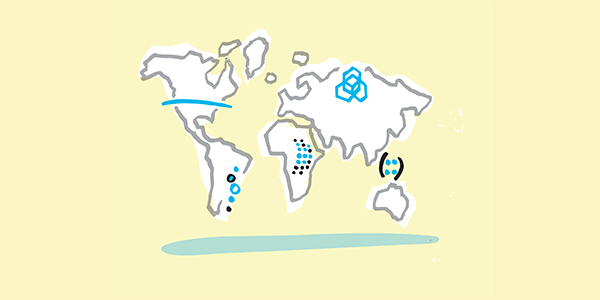
Regional Internet Registries
IP addresses are distributed and registered by the Regional Internet Registries (RIRs). They are not-for-profit membership organizations serving regions of continental scale. They issue and register IP addresses and AS Numbers. They also register transfers […] Read more

Address Blocks and CIDR
IP addresses are organized into blocks using a technology called CIDR. The smallest block has just two addresses. Each block is double the size of the previous block. That means a block of six addresses […] Read more
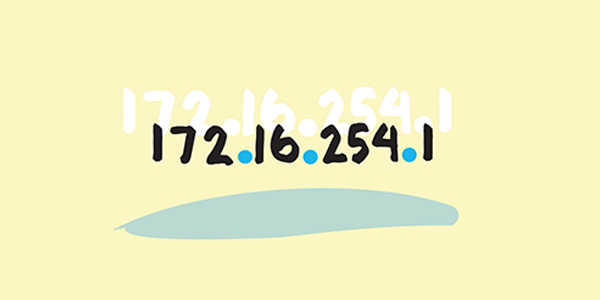
What are the Dots in IPv4 Addresses?
IPv4 addresses are normally displayed in “dotted decimal” format. Each segment represents a byte and is separated by a dot. A byte is eight bits, so the value for each segment is represented as a […] Read more

What Are Class E Addresses?
Internet engineers reserved 268 million IPv4 addresses for “future addressing modes” in 1989. The addresses in 240.0.0.0/4 were documented as “Class E” and never allocated. They have remained reserved for that as-yet-undefined future ever since. […] Read more

How Many IPv4 Addresses Are There?
There are 4,294,967,296 IPv4 addresses because IPv4 is a 32-bit address space. That means it has 232 addresses. Not all of those addresses are available for regular internet users. Almost 600 million IPv4 addresses are […] Read more

Addressing Modes
IP addresses can be used in several different ways. Unicast One-to-one communication. This is the most common form of address usage on the internet. Examples of unicast deployments include video conferencing, online computer games, and […] Read more

What is a Unique Address?
Globally unique addresses are unique across the whole internet. It can mean that just one device has an address. For instance, a device connected to a Wi-Fi network could have a unique IP address. But […] Read more

Carrier Grade NAT
Some large access networks don’t have a unique IPv4 address to give each subscriber. They cannot number their access network with private IPv4 addresses because those are already used on millions of private networks, like […] Read more