Lease, Lease-to-Own, Buy, Or Wait?
Matching IPv4 Acquisition Strategy to BEAD Construction Timelines
The BEAD program has finally gone from planning into construction. After the 2025 restructuring and the Benefit of the Bargain rounds, all 56 states and territories have approved Final Proposals, grant agreements are executing, and shovels are in the ground in the leading states. The first BEAD-funded subscribers are already connected in mid-2026, the construction wave is expected to accelerate through 2027 and 2028 before tapering toward program deadlines at the end of the decade.
For network administrators at participating ISPs and WISPs, that timeline creates a procurement question that rarely gets the same attention as fiber, conduit, and electronics: when do you actually acquire the IPv4 addresses these networks will need, and under what structure?
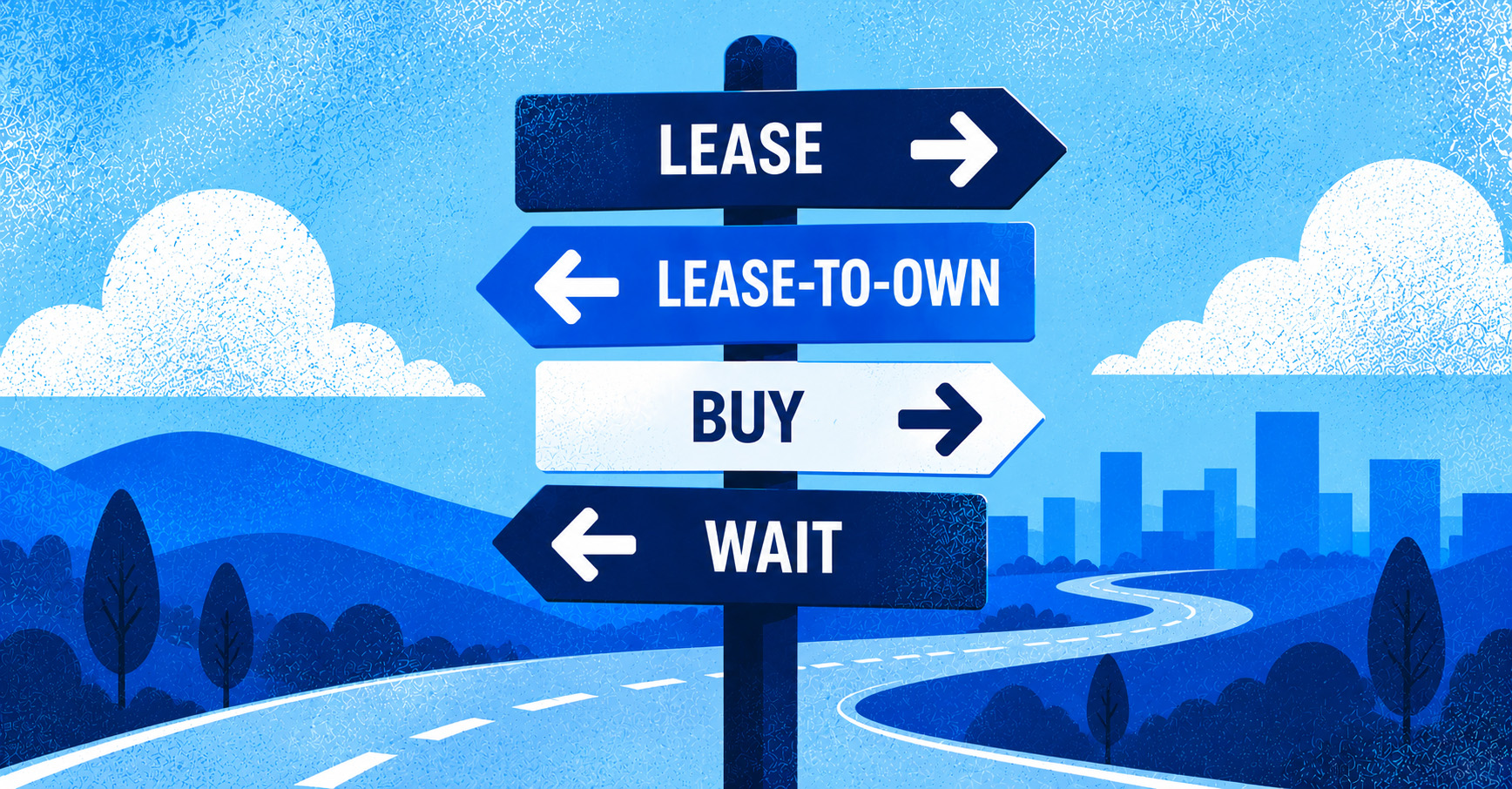
The instinct is to treat addressing like any other bill of materials: buy everything up front, check the box, move on. But BEAD builds don’t consume addresses the way they consume fiber. Address demand follows subscribers, and subscribers arrive in waves that lag construction by months or years. That mismatch is exactly what makes the acquisition-structure question worth working through carefully. It’s a four-way question, not the two-way lease-versus-buy framing the problem seems to suggest. Ideally, work through it with your finance team in the room.
The demand curve doesn’t match the construction curve
Start with how a BEAD-funded network actually fills up. Construction proceeds by milestone: segments pass locations, drops get installed, service activates neighborhood by neighborhood. Subscriber revenue lags network completion. A segment completed in Q2 might not reach meaningful take rates until the following year, and program-wide take rates in rural markets build gradually as marketing, competitive dynamics, and word of mouth do their work.
That means your IPv4 requirement isn’t a single number due on day one. It’s a curve. A project designed to pass 8,000 locations might need addressing for a few hundred activated subscribers in its first two quarters, a few thousand by the end of year two, and its full projected complement only as the build matures. Even with CGNAT compressing the ratio of public addresses to subscribers, the public-facing pool you need still grows in steps, not all at once.
But notice what else the curve tells you: while the timing of demand is uncertain, a large share of the end state isn’t. A network built to pass 8,000 locations will need a base of public addressing for as long as it operates. Infrastructure, CGNAT translation pools, and business customers who require dedicated addresses are all permanent elements of your build. The uncertainty lives in the ramp and the upper end, not in the floor. That distinction between the base load you’re sure of and the increments you’re not is what the acquisition structures below are for.
If your addressing procurement doesn’t reflect the curve, you’re either paying to hold idle space or scrambling to acquire it mid-activation. Both are avoidable.
Option one: lease to cover early activation
Leasing has matured into a genuinely liquid market running parallel to the sales market. As of this writing, current lease rates for ARIN-region space generally fall between roughly $0.30 and $0.50 per address per month depending on block size, reputation, and term, with larger blocks commanding lower per-IP rates. A reasonable early-phase allocation for a build activating its first couple thousand subscribers behind CGNAT, a /22, runs a few hundred dollars a month.
For the early activation phase of a BEAD build, that structure has real advantages. There’s no capital outlay in the same quarters when your capital is fully committed to construction. You can size the lease to actual activation rather than projected completion and scale the leased pool as milestones close. And critically for BEAD participants, lease payments are an operating expense. They sit in a different budget line than the build itself, which matters when your grant accounting and match requirements are already consuming finance’s attention (more on that below).
The disadvantages are the ones you’d expect from renting anything. Leased space is never yours; at contract end, renumbering or renegotiation is your problem. Reputation is inherited. A leased block that arrives with a spotty history on blocklists or with stale geolocation can generate support tickets that cost more than the lease saves. So, vetting the block and the lessor matters as much as the rate. And over a long enough time horizon, leasing costs more than owning. At current market prices, the crossover point where cumulative lease payments exceed the purchase price of equivalent space arrives somewhere in the range of three to just over four years, depending on where lease rates and purchase prices sit for the block size in question. This is well within the operating life of a BEAD network. (For direct comparisons, see IPv4.Global’s Buy-Lease Calculator.)
That crossover math is the whole argument for treating leasing as a bridge, not a destination. But a bridge to what, and paid for how, is where the next two options come in.
Option two: lease-to-own the base load
Between the bridge and the purchase sits a structure the lease-versus-buy framing usually skips: lease-to-own. The mechanics are what the name suggests. You pay monthly, at a rate meaningfully higher than a pure lease, and at the end of the term the block transfers to you. In effect, it’s the purchase price spread across the construction years, without the capital outlay landing in the quarters your build needs cash most.
The numbers make the positioning clear. At the time of writing, the calculator prices a /24 at roughly $128 per month on a straight lease, about $663 per month on lease-to-own, and $6,630 to purchase outright. The lease-to-own payment is five times the lease payment. But every month of it walks toward ownership of an asset, whereas the lease payments move toward a renegotiation. Run the same comparison against renting equivalent addresses from a cloud or upstream provider and the case gets stronger still.
For a BEAD awardee, the fit is almost suspiciously precise. The problem the program hands you is a permanent addressing requirement arriving on a delayed, uncertain schedule, during exactly the years your capital is spoken for. Pure leasing solves the timing problem but builds nothing on space the finished network will need forever. Outright purchase solves the ownership problem but spends capital early. Lease-to-own carries the base load, the portion you’d bet on regardless of take rates, through the construction years and delivers it as an owned asset around the time subscriber revenue arrives to justify it.
It also does quiet work on price risk: the transfer price is fixed when you sign, so the base load is locked in at today’s market without today’s capital. We’ll come back to why that matters.
Three caveats keep this honest. First, because the monthly rate is a multiple of a pure lease, lease-to-own is the wrong vehicle for speculative demand: any space you might hand back belongs on a lease, full stop. Second, terms vary across lessors more than lease terms do: what happens on early exit, whether payments credit fully toward the transfer, and when registration actually moves are all contract questions to resolve before signing, not after. Third, the accounting is not the simple opex of a lease.
Option three: staged purchases timed to milestones
The alternative to one large day-one purchase isn’t leasing over a long term. It’s breaking the purchase into tranches that track the construction schedule. If your build plan calls for three activation phases across late 2026–2029, your addressing plan can call for three acquisitions: an initial block sized to phase-one activation plus headroom, with subsequent purchases triggered by milestone completions or subscriber thresholds rather than calendar dates.
Staging does several things at once. It keeps capital deployment aligned with the same milestones your lenders and state broadband office already track. It lets you buy against demonstrated demand rather than projections. That is, if take rates in phase one run below plan, phase-two addressing shrinks accordingly. And it preserves optionality on block sizing: rather than committing to a /16 up front, you can assemble the equivalent from /18s and /19s as need materializes, which also broadens the supply you can draw from.
The costs of staging are transactional and administrative. Each purchase is a separate negotiation, a separate transfer request, a separate round of due diligence on chain of custody and reputation. Per-address pricing is generally less favorable on smaller blocks, so three /18 purchases will likely cost more per address than one /16. And each tranche re-exposes you to wherever the market has moved since the last one. A point which brings us to the price-risk question.
The case for locking in early, and the case against
Here’s where reasonable people disagree, and where the conversation with finance gets interesting.
The argument for buying earlier than you strictly need: BEAD itself is an address marketplace demand event. Industry projections have the program lifting IPv4 demand meaningfully as new rural networks come online through the decade, layered on top of demand from AI infrastructure buildouts that still need front-end IPv4 for gateways and customer endpoints. Even accounting for the 2025 restructuring shifting a share of locations to satellite and fixed wireless providers with far smaller addressing needs, if a few hundred BEAD subgrantees all show up in the transfer market on roughly the same 2027–2028 activation schedule, the buyers who secured space in 2026 will have bought at whatever today’s price is; the buyers who waited will pay whatever a more crowded market charges. Locking in early converts an uncertain future cost into a known present one.
The argument against: the market has spent the last several years demonstrating that IPv4 prices can fall as well as rise. From peaks above $60 per address in 2021–2022, prices corrected substantially, with large blocks bottoming below $20 per address while smaller blocks held up better; much of the market is now quoted somewhere in the high teens to mid-$40s depending on block size and region. Meanwhile lease rates have barely moved through the correction, which tells you the market itself is uncertain about long-run ownership value. The market is pricing in everything from further softening to eventual IPv6-induced obsolescence, particularly as aggressive IPv6-only deployments using NAT64 actively reduce the permanent base load of IPv4 addresses required. Pre-buying space you won’t use for two years ties up capital during exactly the period your build needs it most. The early spend also exposes you to the possibility that the space will be cheaper when you actually need it. That said, the 2026 data cuts against complacency: transfer volumes are running well ahead of last year, large-block prices have firmed off their late-2025 lows, and IPv4.Global’s own mid-2026 outlook projects a gradual recovery through year-end. The correction proved prices can fall; the rebound is a reminder they can turn before you’re ready to buy.
Notice that lease-to-own sits interestingly across this debate: it locks today’s price like an early purchase, but without the early capital. This bridge structure makes it a way to act on the first argument while respecting the second. What it doesn’t protect against is the scenario where prices fall sharply; you’ve fixed your cost either way. That’s the trade-off.
There’s no formula that resolves this. The choice you make depends on your capital position, your read on the market, and how much of your projected need is firm versus speculative. But the framing that tends to work in practice: commit early (by purchase if you have the capital, by lease-to-own if you don’t) to the portion of demand you’re confident in (locations under contract, phase-one activation, the permanent base load), and stay flexible, via leases or later tranches, for the portion that depends on take rates you haven’t proven yet. That splits the price risk instead of betting the whole requirement on one view of the market.
Capex versus opex, and why finance cares
The accounting treatment of these options isn’t a footnote; for BEAD participants it can drive the decision.
Purchased IPv4 addresses are capitalized. They’re typically treated as an acquired intangible asset. Which means they sit on the balance sheet, and depending on your accounting policy and jurisdiction, may be amortized over a defined useful life or carried and tested for impairment. That has implications for how the acquisition interacts with loan covenants, with the matching-funds picture on your BEAD award, and with how your auditors want the asset documented. A purchased block is also a real asset with residual value: if projections miss and you hold surplus space, it can be resold or leased out, which is not nothing in a market with an active leasing side.
Leased addresses are straightforwardly operating expense. They are predictable monthly expenses, and off the balance sheet in the way subscription costs generally are. For an organization whose capital budget is spoken for through 2028, shifting addressing into opex during construction years and converting to owned space as subscriber revenue comes online is a legitimate financial strategy, not just a procurement convenience.
Lease-to-own lands between the two, and probably closer to purchase than the monthly payment suggests. Because the arrangement transfers ownership at term, your accountants are likely to treat it as a finance lease or installment purchase rather than a simple operating expense. This means some or all of it may end up on the balance sheet, with payments split between principal and financing cost. That’s not a defect; it’s often exactly the treatment a permanent asset deserves. But it does mean the cash-flow profile of a lease with the accounting profile of a purchase, and that combination should be confirmed with your accountants before you sign, not discovered at the first audit.
Whether IPv4 purchases are an eligible use of BEAD funds, versus something funded from match or operating capital, is a question for your state broadband office, the latest direct guidance from the NTIA on eligible matching funds, and your grant compliance counsel. The practical takeaway for network admins is simpler: don’t finalize the acquisition structure without finance and compliance in the loop, because the same block of addresses can land very differently on the books depending on how you acquire it.
Transfer mechanics: the lead time nobody budgets for
Whichever structure you choose, acquired space isn’t usable the day you sign. The transfer process has its own timeline, and it belongs on your project plan.
Within the ARIN region, purchases move under Section 8.3 of the Number Resource Policy Manual. The recipient must demonstrate need for the space under ARIN’s policy criteria, an officer of the organization attests to the justification, and ARIN reviews before approving the transfer. Well-prepared transactions clear in a matter of weeks; poorly prepared ones can stretch considerably longer. ARIN’s pre-approval process lets you get your justification approved before you’ve identified a specific block, which is worth doing early precisely so the transfer itself doesn’t control activation. (One aside for smaller operators: ARIN’s waiting list for unmet requests can eventually supply a small block at no market cost, but multi-year waits make it a supplement at best, not a plan that fits BEAD activation timelines.)
Inter-RIR transfers (buying space registered in the RIPE or APNIC regions and moving it into ARIN) add a second registry’s process, policy checks on both sides, and correspondingly more calendar time, not to mention the potential foreign exchange risks and international tax implications your finance team must prepare for. They can be worth it when pricing or availability favors another region, but they’re the wrong vehicle for space you need routable next month. Add the post-transfer cleanup that determines real-world usability, including updating geolocation databases, establishing ROAs for RPKI, and scrubbing any inherited blocklist entries, and the honest planning number for “signed agreement to production traffic” is measured in weeks at best, and a quarter is a safer assumption for inter-RIR space or blocks needing reputation rehabilitation.
Leases, by contrast, can be operational in days, which is another reason they fit the front of the curve: they buy you time to run purchases properly. Lease-to-own inherits the best of that timeline at the start. During the term the space operates like leased space, under the lessor’s registration with a Letter of Authorization and aligned ROAs, but the registry transfer at the end of the term is a real 8.3 transfer with everything that entails. Put it on the calendar when you sign, not when the term expires.
Acquisition Strategy Comparison
| Strategy | Financial Impact (Capex vs. Opex) | Deployment Speed (ARIN Time) | Long-Term Asset Value |
|---|---|---|---|
| Straight Lease | 100% Opex. Low immediate cash flow impact. | Days (No immediate 8.3 transfer). | None (Asset remains with lessor). |
| Lease-to-Own | Hybrid (likely Finance Lease). Opex cash flow, Capex accounting. | Days to deploy, but 8.3 transfer required at end of term. | High (Full ownership at term completion). |
| Staged Purchases | Tranches of Capex aligned with project milestones. | Weeks to months per tranche (8.3 required each time). | High (Incremental buildup of owned assets). |
| Upfront Purchase | 100% Capex. Highest immediate cash flow impact. | Weeks to months for the initial transfer; none required thereafter. | High (Immediate ownership and residual value). |
Building the procurement schedule
Pull it together and the shape of a sensible plan emerges.
Map your subscriber activation forecast into a quarterly address requirement, with your CGNAT ratios and infrastructure overhead built in — and mark the floor: the base of addressing the finished network will need regardless of how the ramp goes. Then:
- Cover the first activation phase with leased space sized to near-term need, vetted for reputation, on terms that let you scale.
- Put the base load under commitment early with an outright purchase if capital allows, lease-to-own if it doesn’t. In this way the permanent requirement is locked at a known price while construction consumes the budget.
- Start the ARIN pre-approval process now, so your justification is standing ready.
- Schedule purchase tranches against construction milestones, sized to demand you can defend.
- Give every purchase, including the transfer at the end of a lease-to-own term, a transfer-and-cleanup lead time of at least a quarter.
And revisit the plan at each milestone, because both your take rates and the market will have moved.
The point isn’t that leasing beats buying, that lease-to-own suits everyone, or that early beats late. It’s that BEAD hands you a construction schedule with milestones, phases, and a subscriber ramp for you to use. Even better, the situation comes with a menu of sources with enough structures to match each part of the demand curve. Your addressing procurement can mirror that structure instead of ignoring it. The operators who treat IPv4 as a phased procurement item, planned with the same rigor as the outside plant, will spend less, scramble less, and have one less surprise standing between a completed segment and a billable subscriber.