


The most widely reported network outages have a DNS component. Improving DNS resilience is an important part of managing overall risk for network services.
Understanding Today’s DNS
DNS is the service that translates a name like www.ipv4.global into the IP address of the server hosting the website. But while DNS was once a simple service, things have changed. Most popular services are hosted in multiple locations. That not only provides resilience, it also delivers faster service.
Providing faster service often means answering the query close to the user and the service site they’ll use. It is better if a DNS query sent in Miami is answered there, instead of traveling to and from Singapore.

Infrastructure Outages
Some physical infrastructure – like bridges and buildings – can be used for hundreds of years. That’s because physical structures don’t need to make decisions and rivers rarely change location. But IT infrastructure is different. The technology, its uses, and the society it serves are constantly changing. So, it needs more regular maintenance than a solid structure and must adapt as people’s demands change. Making changes, the very nature of maintenance, comes with risk. These risks can be managed and that’s why major IT outages are rare.
Some IT outages impact DNS while others result from a DNS problem.
There is a long history of recommendations for creating robust and resilient DNS infrastructure. In 1997, internet engineers advised placing nameservers at “topologically and geographically dispersed locations on the Internet so that it would be less likely events like power loss, etc., will disrupt all of them simultaneously.”
Implementing practices like these is an important part of why the root DNS servers have 100 percent uptime for 30 years. The root DNS system is the set of DNS servers that answers queries about top-level domains like .com, .fr, and .dev. Individual root DNS servers can be down for maintenance or disconnected by a fiber cut. But the whole system remains available and all queries are answered.
DNS Outages
Amazon Web Services (AWS) and its users experienced problems with its US-EAST-1 Region on 20 October 2025. The outage was widely reported because it took down and degraded services used by people all over the world, not just North America. In its report on what happened, AWS mentioned DNS 39 times.
Other major platforms have had DNS problems that affect customers. Akamai, and Dyn have experienced problems with the authoritative servers that give answers for users. Microsoft was a customer of an external DNS provider that had an issue.
Cloudflare recently had a problem with its servers that get answers for users.
The impact is the same. Users want answers so they can connect to a website or take some other action. If they cannot get a location for the server running the service then they can’t use the service.
Elements of Risk
The two most significant elements of risk are the server infrastructure and the software.
The Infrastructure: Outsourcing hardware to a cloud provider can make sense for many organizations. They can geographically distribute servers to many locations. The customer can get access to that geographic diversity with a single vendor agreement. But the integrated nature of large cloud services is that they run a tightly integrated set of systems. Major problems are rare but their impact is devastating when problems occur.
The Software: There was a time when ISC’s BIND had overwhelming DNS market penetration. BIND is an open source reference implementation for DNS. It supports every DNS feature, which made it very attractive to many organizations. It also meant that a problem in its code could shut down many services.
The DNS industry recognized this and there’s now a choice of open source authoritative DNS servers. These include BIND, CZ.NIC’s Knot, and NLNet Labs’s NSD but they are not the only open source options. There are also proprietary options from Microsoft and others.
So, the challenge is to get the advantages of diversity without the disadvantages of complexity. That’s where ManyCast can help.
ManyCast with ProVision
ManyCast lets you manage a geographically distributed DNS architecture using between 10 and 1,000 nodes and multiple software vendors. ManyCast reduces complexity while providing control. You can automate deployments and changes with APIs.
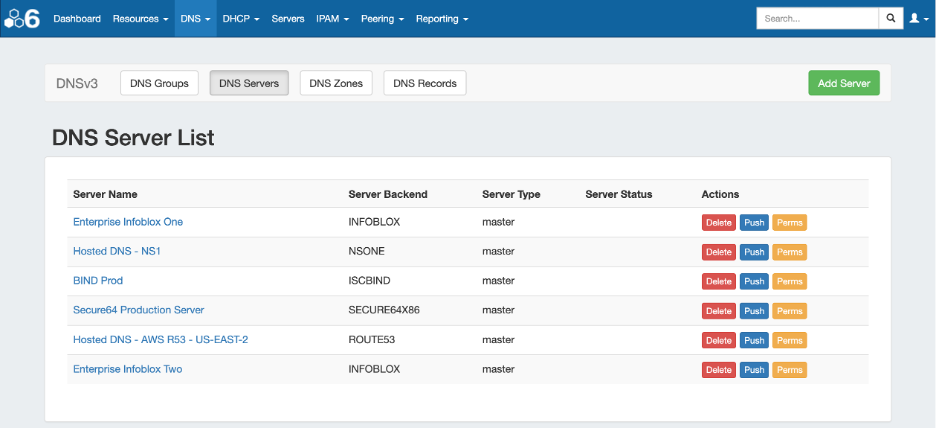
Manage DNS deployments across multiple vendors.
If a DNS node experiences a service problem, your DNS services can be dynamically moved to another node. When a DNS software product experiences a zero-day security issue, those nodes can rapidly be removed from service until a patch is deployed. You can make these changes without worrying about slow service or outages.
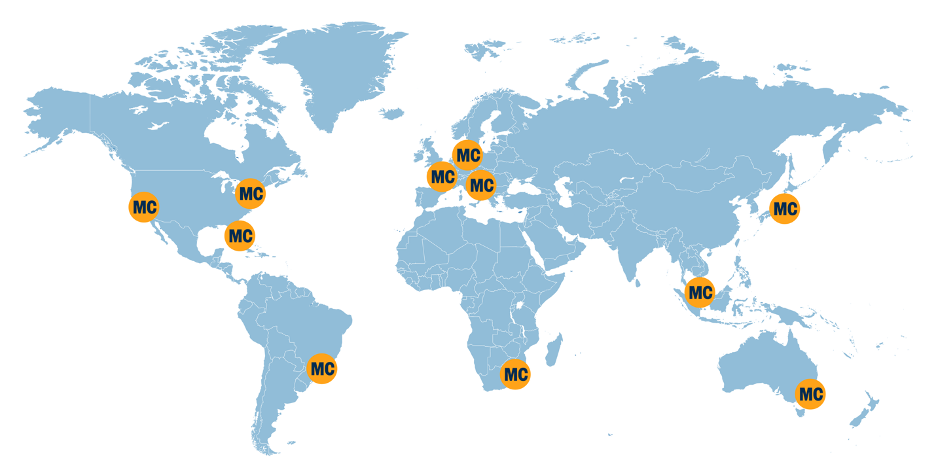
ProVision’s ManyCast network spans multiple globally distributed PoPs strategically deployed across North America, Europe, Asia-Pacific, South America, and Africa. This architecture minimizes latency and improves redundancy, ensuring consistently fast and reliable DNS resolution regardless of client origin or network conditions.
These resilience feature are complemented by automation features when you drive ManyCast with ProVision. ProVision is an integrated DDI suite providing DNS, DHCP, and IPAM services. When they are linked, a change in your underlying network infrastructure can be pushed out to ManyCast automatically, or on a schedule, as you need.
You can get simplified, and centralized control of distributed and diverse DNS infrastructure.
ProVision will monitor reachability and failover performance for you. It will also let you schedule changes and reports. Your team will have a full audit trail showing what happened, when, who authorized the change and why.
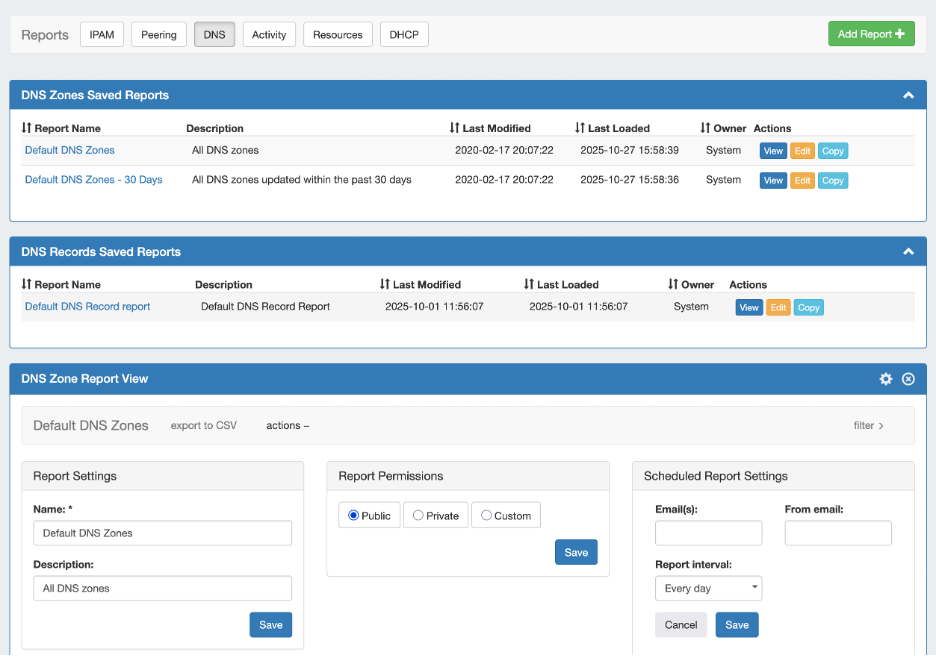
Manage and customize standardized reporting.
Experience Success
ProVision engineers have 15 years of internet infrastructure experience. As a result, ManyCast simplifies the deployment of robust and resilient DNS infrastructure. The ProVision team will partner with you as you implement ManyCast, ensuring your deployment is successful.
For more information about ManyCast, contact us.